
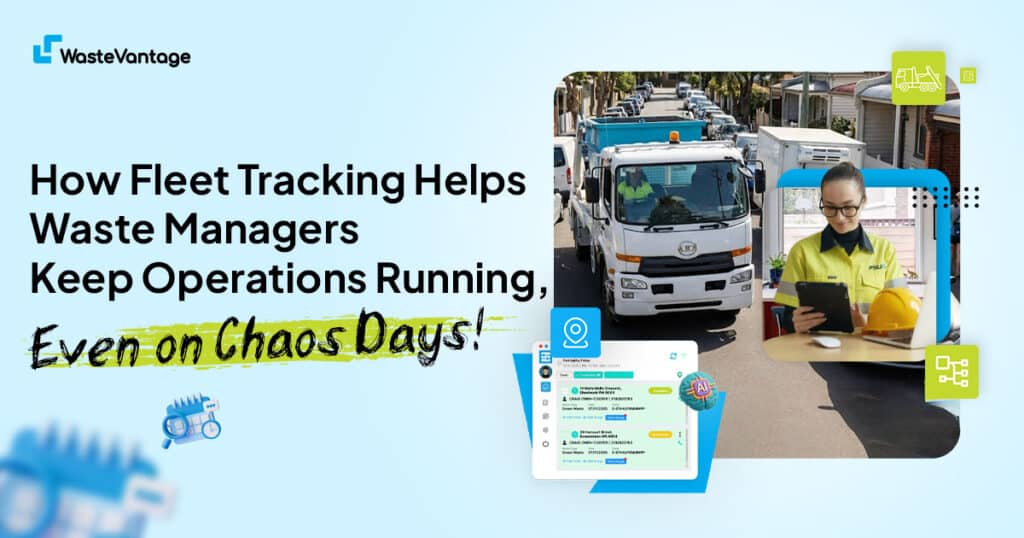
Waste trucks don’t wait for perfect conditions. Early starts, tight suburban streets, last-minute site changes, and compliance pressure hit before most people have finished their first coffee. Trucks queue at transfer stations, admin is juggling calls, and drivers are constantly checking in for updates.
Public holidays like Australia Day, Easter, ANZAC Day, and the Christmas–New Year break add another layer of disruption, with many tips closing early or shutting completely.
From 37–40°C heatwaves in WA, to flash flooding in NSW and Queensland, and icy roads in Tasmania, conditions can shift fast.
This is where WasteVantage fleet tracking earns its place. Waste teams get live visibility of trucks, bins, and drivers. Decisions happen faster, delays are reduced, and the day stays on track.
The Daily Friction Without Fleet Tracking in Australia
Without proper waste management fleet tracking, daily waste operations quickly turn reactive. Operators across Australia know the drill:
- Early mornings, tight streets: Trucks leave at 4–6am, threading through narrow suburban roads, dodging school zones, and sites that have changed overnight.
- Last-minute site chaos: A delayed pour, blocked driveway, or urgent bin swap can send drivers backtracking for kilometres, wasting fuel and time.
- Admin in meltdown: Paper run sheets and spreadsheets rewritten throughout the morning, phones buzzing non-stop with drivers and clients chasing updates.
- Drivers swamped with calls: One NSW operator reported drivers making 10–15 calls per shift just to confirm what’s changed.
- Time lost at the office: Admin teams burning through five hours before most have had a coffee just juggling updates and rewriting runs.
- Missed pickups and annoyed clients: Delays quietly eat into margins, morale drops, and manual systems just can’t keep up with the reality on the ground.
Without a solid fleet tracking system, chaos is just part of the day on Aussie waste sites.
How Fleet Tracking Makes Life Easier
Adding fleet GPS tracking into the mix is a game-changer for waste managers. Instead of chasing updates over the phone or scrambling with paper run sheets, managers can see exactly where every truck, bin, and job is in real time and make decisions that actually stick, while following Safe Work Australia vehicle safety and fleet management guidelines.
Here’s what GPS fleet tracking actually changes day to day:
- Automatic ETAs: Drivers and clients get real-time updates, slashing the endless “Where’s my bin?” calls.
- Live rerouting: Avoid closed tips, blocked streets, or tricky site access without a single backtrack.
- Fleet & asset visibility: Keep tabs on every truck and bin to stop losses before they happen.
- Compliance covered: Digital tip dockets, weight slips, and timestamped photos keep audits smooth.
Local wins:
- A Perth metro operator using fleet GPS tracking Australia–built during 37–40°C heatwaves saw:
- 20% fewer wasted kilometres
- 40% drop in admin time spent reshuffling runs
- Drivers still finishing on time, despite early tip closures
- NSW teams reported that during stormy mornings, using gps fleet tracking led to:
- 50% fewer driver call-ins
- 40% less admin time spent handling constant updates
With fleet tracking solutions, managers stop firefighting and start running the day like a well-oiled machine.
Routing That Holds Up in Real Conditions
Waste operations across Australia aren’t one-size-fits-all, each state throws its own challenges at you. A fleet tracking system lets crews adjust routes in real time, keeping trucks moving without the usual headaches:
- NSW & QLD: Flash floods, heavy rain, and sudden thunderstorms.
- Victoria & SA: Gusty winds and cold snaps that make tight streets tricky.
- WA: Blistering heat, fire danger days, and early tip closures.
- Tasmania: Icy roads, lightning, and rapidly shifting conditions.
With gps fleet tracking Australia–ready, you can:
- Avoid flooded streets before drivers even leave the depot
- Flag fire-danger zones on the fly
- Factor in tip or transfer station closures automatically
Local example: A Perth metro operator using fleet GPS tracking reported:
- No more backtracking when tips closed early
- Noticeable drop in wasted kilometres during heatwave days
- Faster, safer routing decisions without constant phone calls to the office
This shows why fleet tracking solutions aren’t just a “nice-to-have” they actually keep operations running in real Australian conditions
Compliance That Holds Up Under Pressure
Bad weather, late changes, or site chaos don’t stop compliance, loads still need tracking, tip dockets logged, and EPA reports completed properly.
With gps fleet tracking, teams can:
- Snap digital tip dockets and weight slips on the spot
- Take timestamped site photos that stand up in audits
- Flag contaminated loads immediately
- Keep EPA logs accurate, even when storms or heat throw a spanner in the works
Local example: Operators in Queensland running storm-affected mornings reported zero lost compliance records after switching to fleet GPS tracking software Australia–built.
With EPA and council requirements tightening, a reliable fleet tracking system isn’t just handy, it’s essential.
Case Study: Brisbane Northside Operator Managing Storm-Affected Runs
The Situation: Late-spring storms and narrow suburban streets made routine waste runs unpredictable. Early starts, school zones, and last-minute site changes compounded the challenge.
Before Fleet Tracking:
- Around 30% of pickups missed on storm-affected days.
- Drivers made 10–12 calls per shift just to confirm updates.
- Admin spent 5+ hours daily rewriting run sheets.
- Compliance paperwork often lagged behind actual site activity.
After Fleet Tracking:
- 35% fewer missed pickups during bad weather.
- Driver call-ins halved.
- Admin rescheduling time dropped 40%.
- Compliance records remained 100% accurate.
This Brisbane operator now calls WasteVantage the best fleet tracking solution they’ve used, because it keeps runs visible, drivers focused, and operations under control, even when the weather and site conditions change fast.
The Pressures Pushing Waste Managers to Fleet Tracking
The Australian waste industry isn’t getting any easier. Managers face daily pressures that can throw a shift off track before it’s even started:
- Fuel prices climbing faster than a bin truck up a hill.
- Labour shortages and crews turning over mid-season.
- EPA and council rules tightening, with audits looming.
- Clients expecting live updates on bins, pickups, and deliveries.
- Slim margins leaving no room for inefficiency.
- Sites with tricky access, narrow streets, and last-minute changes.
- Peak season chaos, especially around holidays like Australia Day, Easter, ANZAC Day, and the Christmas–New Year break.
Traditional spreadsheets and paper run sheets can’t keep up. That’s why WasteVantage fleet tracking is becoming essential. With it, managers can:
- Slash wasted kilometres and avoid backtracking.
- Cut admin tasks without hiring extra staff.
- Keep drivers on the same page without constant phone calls.
- Give clients real-time updates, boosting trust and professionalism.
- Spot delays instantly and reroute trucks before problems escalate.
- Track bins and assets so nothing gets lost or misplaced.
In short, WasteVantage turns daily chaos into a system that keeps trucks moving, crews focused, and clients happy, all while staying compliant and efficient.
Chaos Without Fleet Tracking
Skip operators and waste teams relying on paper or spreadsheets know the struggle all too well:
- Wrong bins turning up after last-minute site changes.
- Missed pickups leaving clients frustrated.
- Drivers backtracking through blocked streets, flash floods, or sweltering heat.
- Fuel wasted and bins or vehicles going off the radar.
- Admin teams buried in calls and rewriting run sheets constantly.
Old-school systems feel familiar, until they quietly chew through time, money, and your reputation.
Why WasteVantage Is the Go-To Fleet Tracking Solution
WasteVantage is built for Australian waste operations, focusing on results that actually make a difference:
- Live run updates and GPS tracking for every truck and bin.
- Dynamic rerouting for tricky access, closures, or hazards.
- Digital compliance logging and instant reporting.
- Driver-friendly mobile apps and manager dashboards.
- Seamless integration with accounting and booking software.
With WasteVantage, waste managers get their day back:
- Drivers always know their next stop.
- Admin spends less time firefighting.
- Clients get accurate ETAs and updates automatically.
It’s fleet tracking that actually works on the ground, keeping operations smooth, crews focused, and clients happy.
Keep Your Waste Fleet on Point
Running a waste operation isn’t for the faint-hearted. Tight schedules, last-minute site changes, and compliance requirements can turn any day into a scramble.
WasteVantage fleet tracking cuts through the chaos. Managers get a full, real-time view of trucks and bins, drivers know exactly where to go, admin spends less time firefighting, and operations stay on track.
Take control, reduce stress, and keep your fleet moving. Book a WasteVantage demo and see how controlled your runs can be.